


Announcement

Category: News

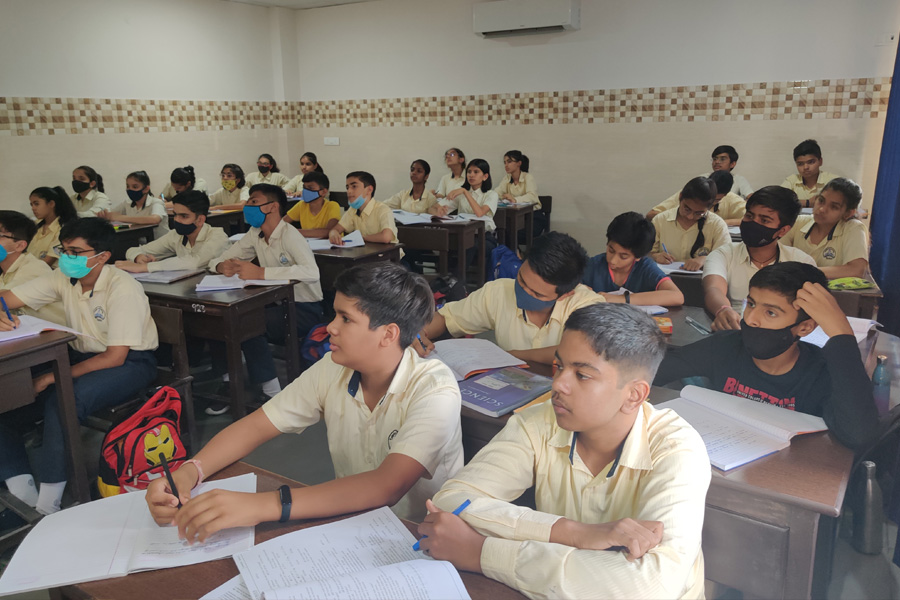
How can parents support a child in wading through grade 9th to 12th?

Along with crucial academic years, the period of teens by itself is a very peculiar phase. This is the age when the child matures and he/she is in the process of becoming a young adult.

How can parents support a child in wading through grade 9th to 12th?

Every pro was once an amateur. Every expert was once a beginner. So dream big and start now!

Along with crucial academic years, the period of teens by itself is a very peculiar phase. This is the age when the child matures and he/she is in the process of becoming a young adult. This is braced by whole lot of physical and hormonal changes. This is extremely critical on our part as an educator to be empathetic towards their plight, to play a wise guide to sensitize them to the broader aspects of life, to understand and help them set their goals for future.

The students, by now get exposed to almost all streams of academic patterns and henceforth proceed further with the options for higher studies, competitions, an apt career and related opportunities. Nonetheless, a major share lies with the school to provide a felicitous counselling for smooth functioning of child’s these momentous academic years, yet parents can play a vital role in helping teens succeed voluntarily in school by being informed and lending a little support and guidance. Even though teens seek independence at this age, parental involvement is an important ingredient for academic success.

At Teoler, parental partnership is emboldened for the kids to know that their parents and school are working in tandem with each other to put things in place for them. Successful parent involvement in children’s education and school has shown to have a positive impact on grades, test scores, behavior at home and school, social skills and adaptation, and attendance. Teoler is known for;

  • Personal involvement with each and every high school child for his academic performance
  • Regular one-o-one sessions with the children for proper guidance
  • Constant career counselling
  • Comprehensive Study Material
  • Detailed topic-wise theory notes & DPPs
  • Vigorously preparing and training students for the competitive tests

Parental Partnership with school from 9th grade onwards helps to keep fundamental checks on a child’s demeanor by;

  • maintaining a coordinated record of his academic performance
  • monitoring the given assignments for timely completion and submission
  • sharing a responsibility to help the child to learn and meet educational goals
  • creating a positive learning environment
  • prioritizing the child’s scholastic objectives
  • addressing child’s behavioral issues
  • exchanging feedback and anecdotes on a regular basis

When parents and teachers work together to establish a thriving academic environment, the effect on their students is profound. Students with engaged parents don’t just have high test scores: their attendance, self-esteem, and graduation rate rise, too. Parent-teacher relationships are the key for helping students on a personal as well as classroom level to reach their academic potential.

Ways to let you know on how to go about supporting your child wading through 9th to 12th schooling years:

  • Support Homework/Assignment Expectations

During the high school years, homework gets more intense and grades become critical for further academic/career plans. Students planning to attend college also need to prepare for the competitive exams. Amid all these changes, many teens are learning how to balance academics with extracurricular activities. An important way to help them is to make sure that your teen has a quiet, well-lit, distraction-free place to study that’s stocked with supplies. Distraction-free means no phone, TV, or websites other than homework-related resources. Be sure to check in from time to time to make sure that your teen hasn’t gotten distracted. Regularly sit down with your teen to go over class loads and make sure they’re balanced, and help him or her stick to a homework and study schedule. Encourage your teen to ask for help when it’s needed. Most teachers are available for extra help before or after school, and also might be able to recommend other resources.

  • Take Attendance Seriously

It’s important that the students arrive at school on time every day, because having to catch up with class work, projects, tests, and homework can be stressful and interfere with learning. Your child’s immunity also plays a vital role for him/her to stay healthy for a regular attendance, so make sure to stick to a nutritious diet and hydration factor.

  • Know the Disciplinary Policies

All schools have rules and consequences for student behaviors. The rules usually cover expectations, and consequences for not meeting the expectations, for things like student behavior, dress codes, use of electronic devices, and acceptable language. It’s important for your teen to know what’s expected at school and that you’ll support the school’s consequences when expectations aren’t met.

  • Offer Help with Studying

Planning is key for helping your teen study while juggling assignments in multiple subjects. Since grades really count in high school, planning for studying is crucial for success, particularly when your teen’s time is taken up with extracurricular activities. When there’s a lot to study, help your teen to break down tasks into smaller chunks and stick to the studying calendar schedule so he or she isn’t studying for multiple tests all in one night. Remind your teen to take notes in class, organize them by subject, and review them at home.

  • Instill Organizational Skills

Learning and mastering the skills of getting organized, staying focused, and seeing work through to the end will help teens in just about everything they do. But this is not usually explicitly taught in high school, so teens can benefit from some parental guidance with organizational and time-management skills, when they are guided to a particular bed time, physical and mental workout, meal and leisure schedule, assignments and extra studies hours and all.

  • Attend Parent-Teacher Meetings / Know the teachers

It’s never too late to build the foundations for parent-teacher communication in schools. But the sooner you do, the more equipped your students will be to reach their academic potential. It helps to address issues like behavior problems, falling below grade-level expectations, benefiting from advanced class work, and understanding their cognitive ability. An actively involved parent is also well acquainted with the teachers taking care of his academic needs. This helps them to navigate their child’s educational ship in one direction at a time with no unnecessary deviation towards two-three things at the same time.

  • Help your child prepare for the tests / Board exams

School tests play an important role in determining a student’s grade. Your child may also take one or more standardized tests or pre-boards during the high school years for getting mentally equipped for the finals. Children go through an obvious nervous period and anxiety in these particular times. It is strongly suggested to the parent to

  • remain calm and not express their anxiety in front of their children during the exams, and rather support them to balance their juggling emotions.
  • avoid using social media around them
  • create a positive and conducive learning environment
  • and help/assist/guide them as much as possible
Published on
| News
Why Smaller Classroom Size Impacts Teaching Quality?

School is a structure designed for receiving education and practicing culture, hence the label itself describes as ‘a place for learning’. And this learning is said to have executed by the educators in the most effective

Why Smaller Classroom Size Impacts Teaching Quality?

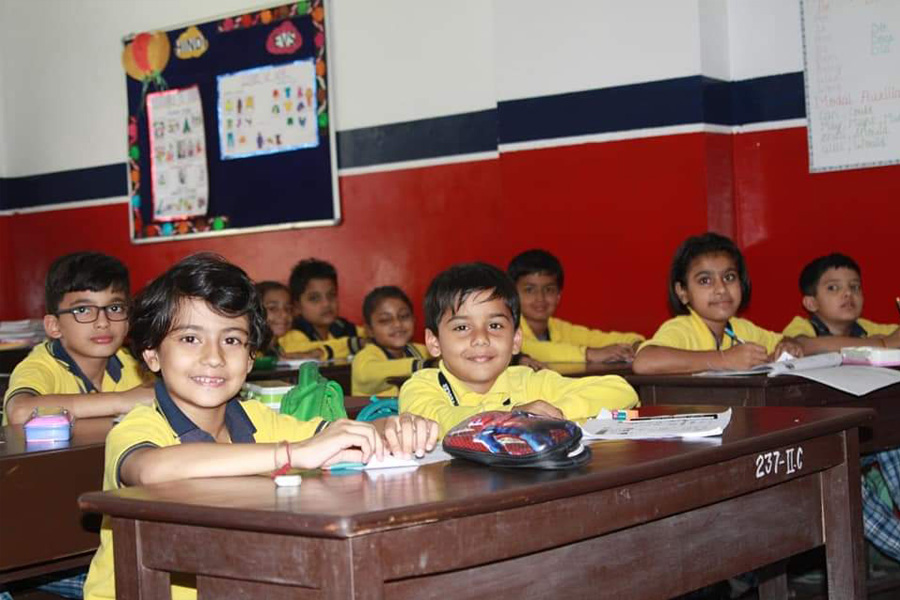
School is a structure designed for receiving education and practicing culture, hence the label itself describes as ‘a place for learning’. And this learning is said to have executed by the educators in the most effective way only when each and every pupil present in his/her class takes away a handful of learning at the end of the day. This outcome would result simply when those present pupils receive equal amount of attention and additional instructional help when necessary from the teacher. This fair transaction between teacher and students is straightforward conceivable only in an adequate teacher-student ratio in a classroom.

Numerous studies have supported the fact that in order to achieve maximum impact class-size reduction should be used in conjunction with other strategies. These would include a review of teaching methods, classroom management and in-service training. Several studies have also shown that reducing class size increases overall student achievement, especially for younger, disadvantaged children.

Teoler, as student-centric and academic oriented institution abides by the rule of keeping a decent size of every class to provide both teachers and students an opportunity to interact more and make a steadfast bond with each other. As we strongly believe that in smaller classes, students can establish stronger relationships with their instructors.

To better their performance, teachers need to identify the specific problems that each student may be facing to evolve in his/her academics. However, in large classes, this may be a challenge for educators, not because their instruction is wrong, but because they don’t have the resources to do so. Small class size works because they give teachers an opportunity to offer students more personalized instruction, which is probably the reason that academic achievement goes up. Teachers don’t necessarily change what they are doing, they are just able to increase their efficacy. Teachers who can spend more time with each student are able to tailor their teaching to specific students’ needs and, in turn, learning outcome improves.

Few prominent benefits of smaller classroom size are:

  • Active participation in classroom activities

 In smaller size class, each student gets the rational chance of participating in classroom discussions or group activities. Hence, they are also encouraged to take part in discussions and are driven to express their opinions.

  • Learning is Enhanced

Not only do students learn more in small classes, but they also learn faster. And this means the class progresses through the course material more quickly. Their learning is enhanced by the confidence that students develop. Their open-ended interactions not only help them build their confidence but also benefit their peers.

  • Collaborative Classroom Environment

Students engage comfortably with each other and form relationships. The effect is a cohesive group of students who support and learn from one another. Becoming more comfortable with the teacher and peers encourage them to become more engaged in their learning.

  • Quick Feedback

With smaller size classroom, it becomes more feasible for the teacher to provide an instant feedback, especially on a written assignment that needs proper monitoring for language and format. More feedback from instructors results in a better, more effective learning experience, and pupils benefit from a more thorough assessment of their work.

  • Hands-on Assignments

 Smaller classrooms are conducive to hands-on assignments allowing students to experience firsthand the subjects they are learning about. Since many students learn better by doing rather than just listening to an instructor talk about a topic, the learning experience is enhanced.

  • Elaborative Learning

 Small class sizes allow the teachers to spend less time on discipline and organization, meaning they spend more time with instruction. With fewer students in the classroom, teachers can explore topics in-depth and expand on themes that students show interest in.

 Content Educators

 A decent size class makes it easier to manage the learning environment and give educators a sense of pride in the classroom. Teachers are happier and feel more fulfilled when they can provide quality instruction. A stress-free teacher constructs a happy environment and positive characters.

At Teoler, we are extremely careful for such measures as our pupils are just not the mere students for us, but each and every one of them is ‘the valued member’ of our Teoler family, that we respect and cherish.

Published on
| News
How to make sure that a child is well disciplined and focused?

Teoler, as the ‘Temple of learning’ does not wish for its students to tumble into the well of regrets, hence we work upon inculcating the right set of ethics and values from the very root of it in our pupils to understand

How to make sure that a child is well disciplined and focused?

Suffer the pain of Discipline, or suffer the pain of regret!

Teoler, as the ‘Temple of learning’ does not wish for its students to tumble into the well of regrets, hence we work upon inculcating the right set of ethics and values from the very root of it in our pupils to understand and regard the importance of exercising daily disciplined habits.

Self-discipline is an invaluable skill that anyone can learn to improve the course of their life over time. Self-discipline means regulating oneself and making corrections to one’s thoughts and behaviors in order to improve oneself. For students, this can mean: keeping yourself focused on assignments or in classes, not getting yourself distracted during lectures or times of study and making sure that you’re on track with deadlines.

Besides academics, students must learn the discipline in School because without the discipline; students can’t be well educated. The four walls of a disciplined classroom can bring a huge difference in a student’s life to expand wide-ranging dimensions for his/her future. Discipline in students’ life opens the door of many rare and ample opportunities, and because of this, students gain success in each field of their life. In a student’s life, the discipline is always catered as a guide to focus on their goals. The disciplined life is classified by success, efficiency, and better time management.

It is imperative for an educator and a parent to understand that Discipline teaches the children to be focused and motivated towards their studies as well as other fields of life. The students with strong ethics and values are more focused.

If you are wondering on how to make sure whether your child is categorically disciplined and focused while studying in our school, here is the bale of positive practices that is followed persistently at TEOLER:

  • Formation of Values and Basic Ethics

 While ethics and values are essential in whatever stage of life we are in, the values that most adults have are the ones that were instilled in them during their childhood. They form the fundamentals in any student’s life. Basic ethics and values are the virtues taught to help people lead a disciplined life. At Teoler, we believe that values such as kindness, courage, humility, honesty, truthfulness, integrity, respect, hard-work, tolerance, compassion, empathy, and inclusivity are extremely important to be instilled from an early age, to build a child’s character, as it forms the very core of their being and becomes the foundation of their moral beliefs throughout their lives. These basic ethics are those essential frames of life that lead to respect the broader picture of humanity.

  • Inculcating Good Habits

A habit cannot be tossed out the window; it must be coaxed down the stairs a step at a time.

As precisely quoted by Mark Twain, a good habit needs to be instilled in a child with consistent and steady daily practice. We, at Teoler hold our firm belief in the fact that a child with good habits makes steady progress in studies, career, personal life, social life and all. In academics, disciplined habits and time management skills are essential for success and balance. Our classroom environment promotes a daily gulp of essential habits for students to;

  • Habituate themselves into maintaining a well-balanced schedule
  • Develop the habit of studying and revising everyday
  • Develop daily reading habit
  • Learn to manage time properly
  • Present themselves in an elegant manner
  • Keep a self-check on hygiene factors
  • Always be polite and considerate towards others
  • Being respectful to elders, teachers, and friends
  • Preventing the sense of entitlement in kids

Teoler firmly finds its modicum of faith in raising a generation against the viciousness of the changing world of helicopter parenting, over-involved guardians and uber-protected children, where a self-focused, “all about me” generation is being produced. Since it’s imperative for a child to realize the sense of responsibility from the very tender age of schooling years, we teach our kids to strike a healthy balance between being dependent and taking ownership. The humble environment of the school encourages the students to practice daily dose of gratitude, respect different perspectives, be helpful and kind and walk as a single Teoler family.

  • Operant Conditioning

Our approach towards designing an effective classroom management pertains to keeping a proper combination of intrinsic and extrinsic motivating factors. It helps our kids to shed their inhibitions in the learning process and adapt to the structured education pattern of the classroom. Regular behavioural checks, diary schedules, anecdotal records, counselling sessions for both student and parent, academic feedbacks, and positive reinforcements are some of the strongest tools to delineate the best characters for the future, and that is what Teoler aspires for your children.

To conclude, these basic ethics and moral values are the building blocks of personality that help in building the better character of people.

It is absolutely important to teach values in students because it is then that they take their first steps towards life, and it matters that they do it right. These learnings shape their attitudes, beliefs, and ideas and help them develop into undeterred and morally strong individuals.

Remember that it is our role as educators, parents and caregivers to put our time and effort into imbibing these values in our children, as it is from their parents and teachers that children are inspired the most.

Published on
| News
Importance of The School Integrated Program

School is an integral part in holistic development of a child, and reinforcing confident and positive competitive spirit in the students is significantly imperative in such tough transitions

Importance of The School Integrated Program

School is an integral part in holistic development of a child, and reinforcing confident and positive competitive spirit in the students is significantly imperative in such tough transitions when the world is all about ambitious mindset, perseverance, resilience, and hope.

The school integrated program is indeed a good deal of benefits regarding developing a child in a better person and build bright future in the education world. It helps a student to plan his/her future career and profession which leads him/her to be an independent thinker. The school integrated program is a fully customized program which serves the dual object of ‘Excellence in School/Board Exams + Cracking Competitive Exams like IIT, JEE / NEET/KVPY/ NTSE, Olympiad’ etc.

Teoler aims at tutoring our pupils for competitive exams in a Pattern Proof Mode. This means that the students are prepared to give their best and deliver optimum performance even if the pattern of the exam is changed at the last minute. At Teoler, we focus to impart quality education to students, while also equipping them to appear for various All-India competitive examinations.

How School Integrated Program Helps a Student:

  • Prioritization

 Accomplishing your goals requires hard work, motivation, and focus—and focus means setting priorities and not taking on too much, so you can concentrate on the effort that really matters. Here at Teoler, we intend to set such parameters right from the tender years of middle schooling where our pupils are exposed to a dynamic competitive pitch in a very subtle manner by appearing in an in-house preparation test for NTSE training batch. This helps us to break our batches down to specific groups with different needs for focus and guidance. The students also realize their areas of strength for further goal setting and start working towards the right and promising direction. They work to become not what they want to but what they know they can.

  • Single Streamlined Syllabus

When it comes to meeting all the demands of Common Core, Teoler gives the sheer credence to the fact that standards require more depth and less breadth. We delve into the most effective ways to streamline our syllabus for our pupils to follow one prominent topic at a time that comes out as the product of integrating curriculum, combining test prep into daily learning, and altering topics. Comprehensive Study Material – Detailed topic-wise theory notes & DPPs with multi-level exercise for Physics, Chemistry, Biology, Maths and Mental Ability as well as the review tests are the part of regular classroom rigour. It helps our pupils to sink in with stress free studies as the school & coaching curriculum are fully synchronized.

  • Striving Self-study Diligence

“Success is the sum of small efforts, repeated day in and day out.”

 Self-motivation and strategic learning are kindred spirits that both support and depend on each other. Teoler through its consistent motivation and constant reminders for self-study, trains the students to invest time, attention and mental energy for building the attitudes, skills and knowledge needed for making strategic learning decisions. Our students realize the importance of self-study for claiming the path of success and invest as many hours as required for a timely revision of all the concepts taught in a class.

  • Safe School Environment

Parents no longer have to worry about their child’s safety while have opted for the school integrated program as the safety related issues of the child are addressed by the school management itself, as the coaching is provided within the school premise. This system even becomes more times saving since the students are not required to go to coaching classes in the evening thereby saving their valuable time for self-studies.

Contact Us

We would love to hear from you.

Please fill the form or email us at
info@teoler.com